
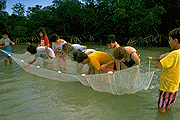
Seining
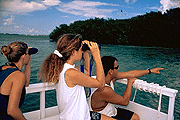
Bird
Watching
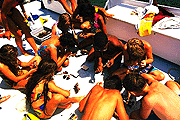
Sponge
Lab
© Copyright Seacamp Assoc. Inc. All Rights Reserved






OUR PROGRAMS - NEARSHORE
ECOLOGY
CORAL ECOLOGY - COASTAL ECOLOGY - MARINE
INVESTIGATIONS
EVENING
PROGRAMS - VAN TRIPS
NEARSHORE ECOLOGY-
OPTIONAL BOAT TRIP/WADING AT
NHMI- DAYTIME PROGRAM #2
Sponge Community
Loggerhead, vase and stinker
sponges are just a few of the many sponges found in the shallow
waters around Big Pine Key. Students snorkel to observe sponges
and their associated plants and animals. Stresses of living in
shallow water are important concepts covered at all nearshore
sites.
Mixed Algal Community
Dozens of species of algae live on hard bottoms and serve as the
basis for a thriving community of invertebrate animals which
includes crabs, spiny lobsters and seastars. Snorkelers can easily
observe these organisms in this shallow water habitat.
Turtle Grass Community
Surrounded by the soft
sediments which they accumulate, turtle grass beds are an
important component of shallow areas in the Keys. Students snorkel
over grass beds to observe the animals that live on and among the
seagrass blades.
Watson's Hammock Trails
A short trip by boat brings students within an easy wade and walk
into a tropical hardwood hammock. This walk takes students through
fringing mangroves, scrub-thorn areas, and pine flatwoods
communities, leading into a basin mangrove forest adorned with
hundreds of bromeliads. Another trail leads into a rare hardwood
hammock, where remnants of native American Indian middens are
visible along the trail. This trip is also an option for a van
trip, for groups that bring a van. The hammock is accessed via a
trail through the National Key Deer Wildlife Refuge. Observe
several threatened and endangered species (flora and fauna)
indiginous to these islands.
Coralline Algae Community
Shoals and mounds of coralline
algae are excellent snorkeling and wading sites. Hosts of
invertebrates and fish utilize these areas for protection and
food.
Mangrove Snorkel
At high
tide, mangrove islands make fascinating snorkeling sites. Sponges,
tunicates, algae and other sessile organisms cover the roots.
Small fish are abundant under the trees. Gulf or Atlantic study
sites are available.