
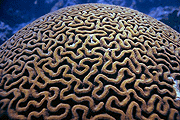
Brain
Coral
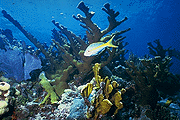
Looe
Key
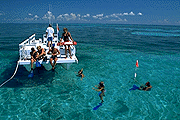
Our
Classroom
© Copyright Seacamp Assoc. Inc. All Rights Reserved






OUR PROGRAMS - CORAL ECOLOGY
NEARSHORE ECOLOGY - COASTAL ECOLOGY
MARINE INVESTIGATIONS - EVENING
PROGRAMS - VAN TRIPS
CORAL ECOLOGY -
SNORKELING TRIPS BY BOAT - DAYTIME
PROGRAM #1
Inshore Patch Reefs
Located in 10 -12 feet of water
about two miles from NHMI, the patch reefs (also referred to as
"the coral heads") are located landward of the Florida
Reef Tract. The circular patches of star and brain corals harbor a
diversity of fish and invertebrates easily observed by snorkeling
students.
Offshore Bank Reef
Looe Key National Marine Sanctuary, a bank reef seven miles south
of NHMI, is part of the Florida Reef Tract. Looe Key exhibits
classical reef zonation and development patterns (spur and
groove), with depths ranging from the reef crest (2-4 feet) to 60
feet. Possible study sites include the fore reef and the back reef
(lagoon). This program option is available to older students only
(9th grade and above).
Soft Corals
Adjacent to the coral heads and in nearby shallow hard bottom
areas are stands of sea whips and sea fans (gorgonians). Students
enjoy the diverse invertebrate communities in these areas.
Exploring this habitat may be combined with a trip to the patch
reef, or the soft coral community could be an option for a second
boat trip.
Non-Reef-Building Coral
Communities
Non-reef-building corals, such as rose
coral, finger coral and golf ball coral, grow in shallow water all
around NHMI, affording snorkelers an excellent opportunity to view
living corals "up close".
Gulf
of Mexico Coral Communities
High school groups opting
for an all-day boat trip may want to snorkel around coral
communities in the backcountry of the Gulf of Mexico. The relative
wilderness of the area and its unique environment make for an
interesting contrast to the reefs of the Atlantic Ocean side of
the Keys.